




If you’ve been researching how to start a bounce house business, you’ve probably noticed how attractive the model is. Startup costs are relatively low compared to other rental businesses, the equipment is durable, and demand is steady year-round. From birthday parties to school events, inflatables are always in demand.
But learning how to start a bounce house rental business properly is what separates a profitable operation from a stressful side hustle. Many beginners underestimate the logistics, planning, and systems required to scale.
In this guide, you’ll learn exactly how to start an inflatable rental business from scratch, including real-world examples, operational tips, and how to grow efficiently using tools like Booqable.
1. Market research: finding your “inflatable” niche
The first step in understanding how to start a bounce house rental business is knowing your market. Without this, you risk buying inflatables that don’t rent.
Start by searching for competitors in your area. Look up phrases like “bounce house rentals near me” and analyze the businesses that show up. Pay attention to their pricing, inventory, and branding.
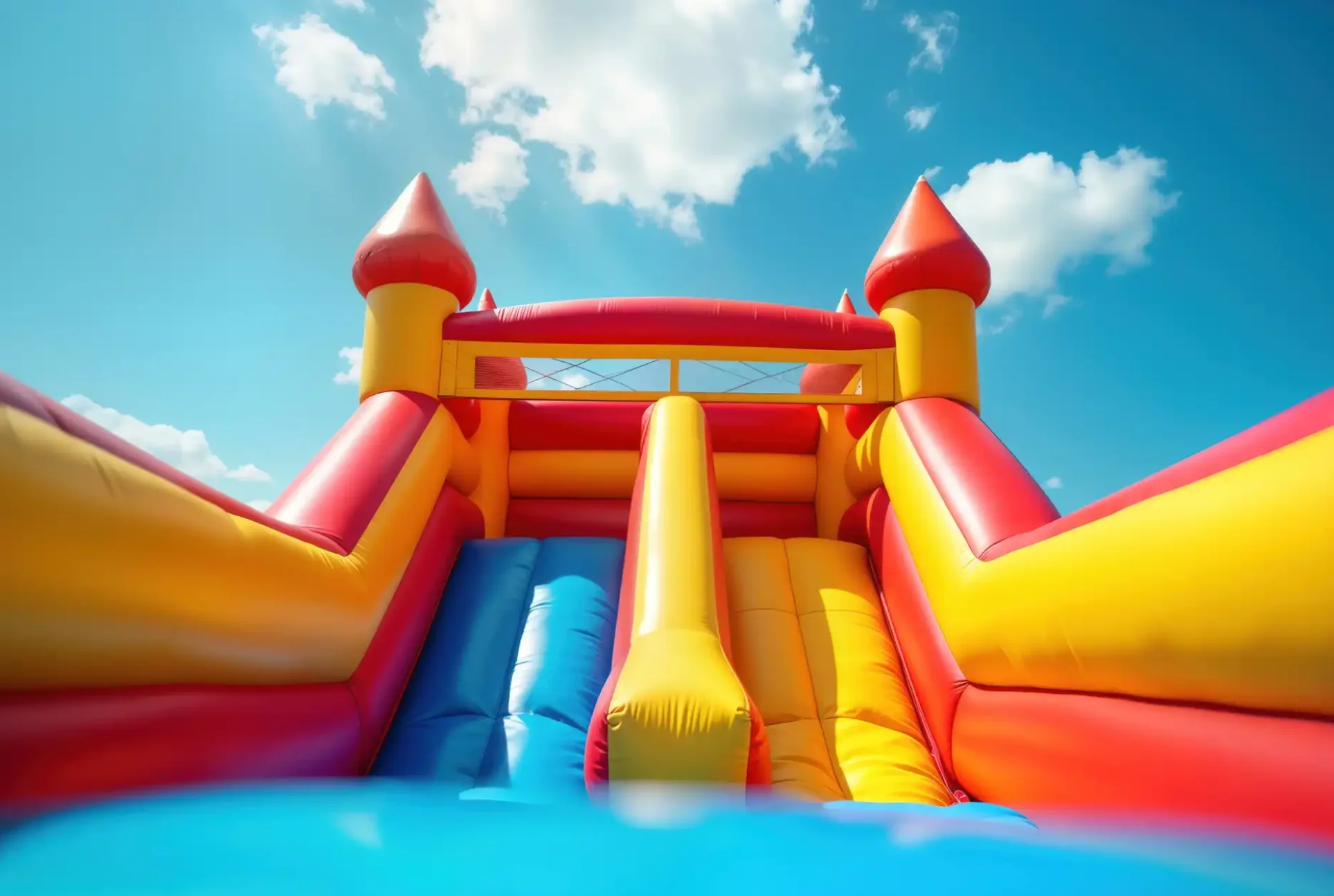
Instead of copying competitors, look for gaps. For example, in many suburban areas, most companies offer brightly colored castle-style inflatables. However, some newer businesses have found success offering modern white bounce houses for weddings and upscale events. These often rent at a premium price because they appeal to a different audience.
Another important distinction when learning how to start an inflatable rental business is understanding the difference between residential and commercial units. Many beginners make the mistake of buying cheaper residential inflatables from big-box stores. These are not designed for frequent use and can wear out within weeks.
For example, small rental startups sometimes initially buy three residential units to save money. However, within a matter of months, seams began to tear, forcing them to reinvest in commercial-grade inflatables. Starting with commercial PVC units would have saved both time and money.
2. Choosing the right equipment
When learning how to start a bounce house business, your inventory decisions will directly impact your revenue.
A smart starting lineup typically includes a standard bounce house, a combo unit with a slide, and a seasonal inflatable such as a water slide. This combination allows you to serve a variety of events from birthdays to summer parties.
For example, a new business can start with just two units: a 13x13 bounce house and a wet/dry combo slide. Either one could quickly become their best performer during summer months, generating twice as many bookings as the standard unit.
Beyond the inflatables themselves, you need essential supporting equipment. Every inflatable requires a reliable blower, and experienced operators always carry a spare in case of failure during setup. Anchoring systems are equally critical. For grass setups, heavy-duty stakes are required, while sandbags are necessary for hard surfaces like driveways or indoor venues.
Transport equipment is often overlooked when thinking about how to start an inflatable rental business. A heavy-duty dolly can prevent injuries and significantly reduce setup time. Many inflatables weigh over 200 pounds, and without proper handling tools, deliveries can become physically exhausting.
Cleaning supplies are another must-have. A professional operation uses non-toxic disinfectants and vacuums between rentals. This not only keeps equipment in good condition but also reassures customers about safety and hygiene.
3. Operations and logistics: where the real work happens
A common misconception when learning how to start a bounce house rental business is that most of the work happens during the event. In reality, logistics take up the majority of your time.
Transport
Transportation is one of the first challenges. Many beginners start with a small trailer that can be towed by an SUV. This is often enough for two or three inflatables and allows flexibility without a large upfront investment.
For example, a startup might begin with a 5x10 open trailer and quickly realize that efficient loading and unloading can save hours each weekend. As demand grows, some businesses upgrade to enclosed trailers or cargo vans to protect equipment and improve branding.
Scheduling & delivery
Scheduling is where efficiency determines profitability. If you have five rentals booked on a Saturday but they are spread across different parts of your city, you could lose hours driving back and forth.
Successful businesses group deliveries by location to save time and fuel. One business owner could increase their daily delivery capacity by 40% simply by re-organizing routes geographically instead of scheduling bookings in the order they were received.
This is a critical lesson in how to start a bounce house rental business that scales efficiently.
The legal layer (briefly)
Legal requirements are an essential part of how to start a bounce house business. Most operators register as an LLC and purchase general liability insurance to protect against risks.
Many venues, especially schools and public parks, require proof of insurance before allowing setup. For example, a company renting to a school district may need to provide an “additional insured” certificate before the event is approved.
Some regions also require annual inspections and safety certifications. Staying compliant not only protects your business but also builds trust with clients.
More importantly, residential inflatables are often not permitted for commercial use. Many insurance providers will not cover claims involving non-commercial equipment, and some venues like schools or public parks require proof that your inflatables meet commercial safety standards. Starting with commercial-grade PVC units helps you stay compliant and protects your business from unnecessary risk.
This content is for informational purposes only and does not constitute legal advice. You should consult with a qualified legal professional to ensure your business complies with all local laws and regulations.
4. Building a professional online presence
In today’s market, learning how to start a bounce house rental business includes building a strong online presence. Customers expect to browse, book, and pay online without needing to call.
Your website should showcase high-quality images of your inflatables in real-life settings. For example, instead of using manufacturer photos, successful businesses often take photos in clean backyards or at actual events. This helps customers visualize the experience.
Real-time availability is one of the biggest upgrades you can make. With a system like Booqable, customers can instantly see which inflatables are available for their event date. This eliminates back-and-forth communication and prevents double bookings.
A rental company that switches from manual booking via phone to an online system can see a huge increase in bookings very quickly simply because customers could reserve instantly.
5. Managing your business with Booqable
As you scale, managing operations manually becomes difficult. Understanding how to start an inflatable rental business includes setting up systems early.
Rental software like Booqable allows you to track inventory, manage bookings, and automate communication. For example, when a customer books a bounce house, the system can automatically include required items like blowers and extension cords. This prevents costly mistakes during delivery.
The mobile app is particularly useful for teams working in the field. Staff can check items in and out, scan barcodes, take tap-to-pay payments, and update orders in real time.
Automation also improves customer experience. For instance, you can send automatic emails before events reminding customers to prepare the setup area.
6. Pricing your rentals for profit
Pricing is a key part of how to start a bounce house rental business successfully. Your rates need to cover costs while remain competitive.
Most businesses use a daily rate model because it is simple and easy for customers to understand. For example, a standard bounce house might rent for $200 per day, while a combo unit could be priced higher.
Packages are another effective strategy. A business might offer a bundle that includes two inflatables and a concession machine for a discounted rate. This increases average order value while providing more value to customers.
With Booqable, you can create flexible pricing rules, apply discounts, and automatically calculate delivery fees. This ensures consistency and reduces manual work.
7. Marketing your bounce house business
No guide on how to start a bounce house business is complete without marketing. Even with great equipment, customers need to find you.
Local SEO is one of the most powerful tools. Optimizing your Google Business Profile and collecting reviews can significantly increase visibility. Many customers choose a company based on ratings alone.
Social media is equally important. Posting videos of setups or time-lapse inflations helps build trust. For example, a business that regularly posts short setup clips on Instagram often sees increased engagement and inquiries.
Tracking tools like Google Analytics and Meta Pixel allow you to measure what’s working. Many rental companies are constantly discovering that Facebook ads targeting parents in their area can generate a large amount of their bookings, allowing them to focus their budget more effectively.
8. Growing and expanding your business
Once you understand how to start a bounce house rental business and have consistent bookings, the next step is growth.
Adding new inflatables such as obstacle courses or water slides can attract repeat customers. Expanding into related rentals like tents, tables, and games is another common strategy.
For example, a business can start with just two inflatables, and eventually expand into full event rental services. By offering complete party packages, you can increase your revenue per booking and build long-term customer relationships.
Using software like Booqable makes it easy to manage a growing inventory without losing control of operations.
Building a business that lasts
Learning how to start a bounce house business is about more than buying inflatables. It requires planning, organization, and the right systems to manage growth.
By understanding your market, investing in quality equipment, and using tools like Booqable, you can build a reliable and scalable operation. Whether you’re just exploring how to start a bounce house rental business or ready to launch, focusing on efficiency and customer experience will set you apart.
If you approach it strategically, starting an inflatable rental business can grow from a simple side hustle into a thriving local brand.