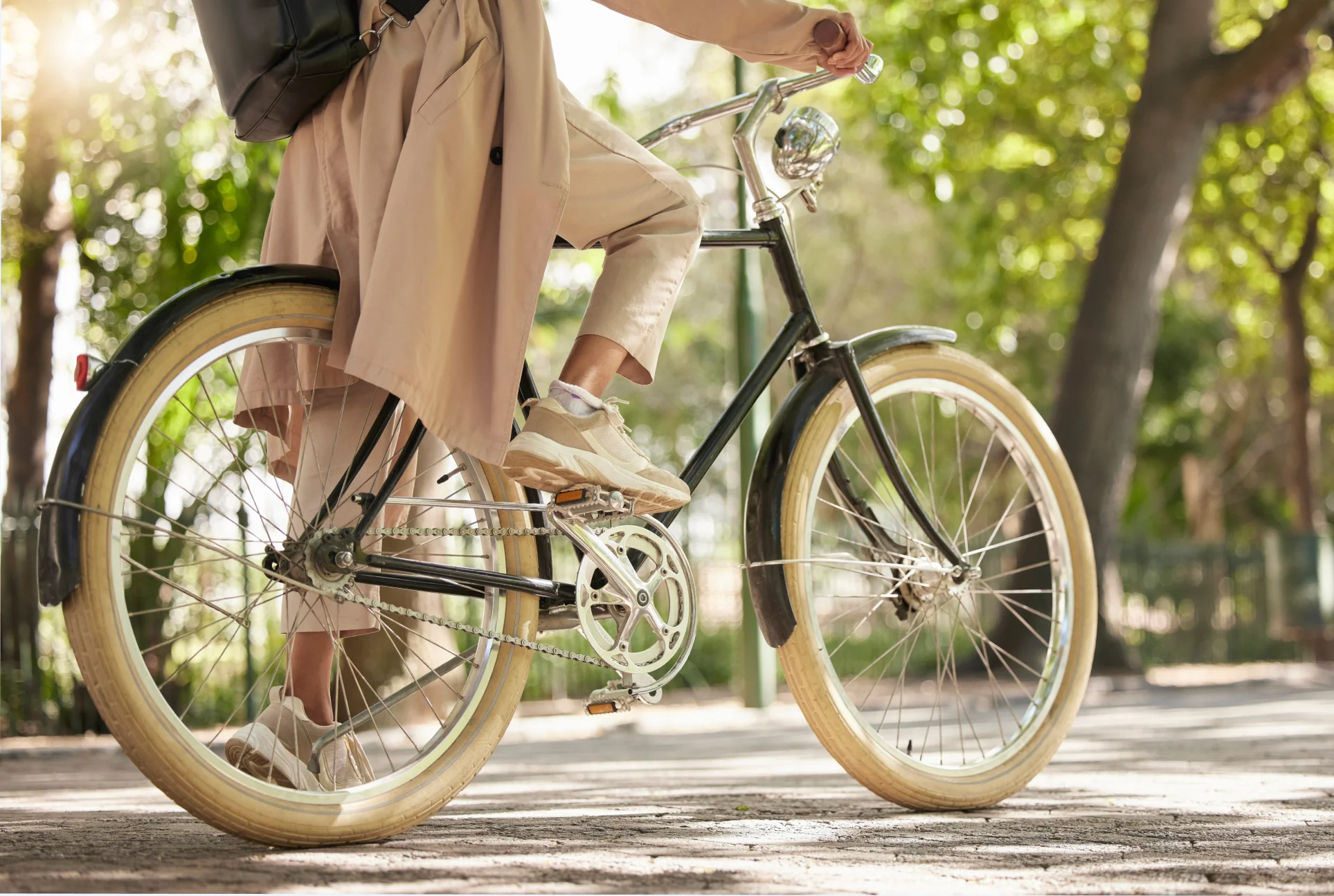
If you’re after a business built around getting people outside and moving, starting a bike rental business could be the best decision you make.
Every week, tourists want to explore a new city without renting a car, families visit the coast and need bikes for the kids, hotels look for reliable rental partners, and cycling groups need road bikes for multi-day holidays. All of those moments need someone with bikes ready to go.
A bike rental business supplies bikes to customers for a set period, whether that’s an hour on the boardwalk or a week-long cycling trip, and takes care of maintenance, storage, and turnover between rentals.
Starting a bike rental business requires a meaningful upfront investment in quality bikes, storage, insurance, maintenance equipment, and a suitable location. However, there is room to build repeat business through hotels, tour operators, cycling groups, and returning visitors alongside one-off tourist rentals.
How a bike rental business works
A bike rental business keeps a fleet of bikes, ranging from bicycles to e-bikes, road bikes, and mountain or trail bikes, and rents them out for anywhere from an hour to several weeks.
Customers usually pick up and return the bike at your shop, though plenty of operators also deliver to hotels, vacation rentals, or trailheads and pick up again once the rental period ends.
Unlike a bike shop that sells bikes, your inventory has to survive being ridden hard by different customers over and over, which means maintenance and condition checks matter as much as the booking itself.
Typical customers include:
-
Tourists exploring a destination
-
Families on vacation who need bikes for kids and adults
-
Cycling groups renting road bikes for multi-day holidays
-
Hotels and resorts offering bikes as a guest perk
Most established shops build a steady stream of bookings through partnerships with hotels, resorts, tour operators, and travel businesses, along with returning visitors and cycling enthusiasts.
Knowing your way around a derailleur helps you catch a problem before a customer does, but what matters just as much is understanding your area. A beach town, a cycling destination, and a downtown tourist district each call for a different mix of bikes. Looking at what competitors already offer will show you where the gaps are before you spend anything.
The costs of starting a bike rental business
Most of your startup budget will go toward purchasing your fleet, securing storage or retail space, and covering insurance, tools, software, and marketing.
The total cost varies significantly depending on the size of your fleet, the type of bikes you offer, and whether you operate from a storefront, a hotel partnership, or a delivery-based setup.
Prices vary a lot depending on the type of bike and whether you buy new or used.
-
Bicycles: $250 to $600 new, $100 to $300 used
-
Road bikes: $800 to $3,000 or more new
-
Mountain or trail bikes: $500 to $1,500 new
-
E-bikes: $1,200 to $3,500 new
Many new operators start with a mix that leans on bicycles and e-bikes, since those two categories cover a wide range of customers. Road bikes can be a strong addition in destinations popular with cycling groups, while mountain or trail bikes make more sense in areas with established off-road routes.
Other startup costs
You should also budget for:
-
Helmets and locks for every bike
-
A repair stand and basic tool kit
-
Replacement parts and maintenance supplies
-
Storage racks or a secure storage space
-
Shop rent or commercial storage costs
-
General liability insurance
-
Business registration
-
A website
-
Rental software
-
Marketing
-
GPS trackers for higher-value bikes
-
Working capital
Many operators begin with a modest fleet and expand over time as demand grows and revenue allows for additional investment.
Purchasing your bikes
Once you’ve planned and registered your business, it’s time to buy your first fleet.
Most operators don’t start with fifty bikes. A shop opening near a beach boardwalk might start with fifteen bikes, split between standard bicycles, e-bikes, and a few road or mountain bikes depending on local demand. Operators in destinations popular for cycling holidays may want to invest more heavily in quality road bikes suitable for multi-day rentals.
Start with the mix your market research supports, then add more of whatever is renting out fastest.
Stick with established manufacturers such as Trek, Giant, Specialized, or Rad Power Bikes for e-bikes. They build to a consistent specification, parts are generally easier to source when something breaks, and customers may recognize the names, which can help build trust before they have even ridden one.
When choosing bikes, prioritize durability, serviceability, and replacement-part availability over premium features that may not matter to rental customers.
How much money can you actually make?
Revenue depends on your location, your mix of bike types, your pricing, seasonality, and how many days a week each bike actually goes out.
Typical rental pricing in many markets looks like this:
-
Bicycles: $20 to $35 per day, $90 to $150 per week
-
Road bikes: $40 to $100 or more per day
-
Mountain or trail bikes: $35 to $55 per day
-
E-bikes: $45 to $80 per day, $220 to $350 per week
Higher-end road bikes may command significantly higher rates, particularly when rented to cycling groups for multi-day holidays.
Most rentals include a helmet and lock, with deposits or a card on file to cover damage. Every rental also comes with costs of its own, including:
-
Maintenance and part replacement
-
Storage or shop rent
-
Insurance
-
Staff wages
-
Software
-
Marketing
-
Payment processing
-
Depreciation on the fleet
A shop with fifteen bikes renting out for an average of $30 a day, four days a week each, brings in close to $7,000 a month before expenses.
That example does not account for seasonality, maintenance downtime, taxes, staffing, or rent, but it shows why utilization matters. Getting more bikes out the door more often matters far more than owning a bigger fleet that sits half-used.
Steps to start a bike rental business
Conduct market research
Call nearby bike rental shops, or book a rental yourself the way a regular customer would.
Find out what a bicycle costs for a day in your area, whether e-bikes or road bikes are already available, how far in advance customers need to book, and what types of bikes regularly sell out.
Look at local tourism patterns too. A coastal town may have strong demand for family bikes and e-bikes, while a destination known for cycling holidays may support multi-day road bike rentals, group bookings, and delivery to hotels.
If nobody nearby offers a particular bike category yet, that is worth knowing before you decide on your own fleet. It may represent an opportunity, but it may also mean there is limited demand, so speak to hotels, tour operators, and local tourism businesses before investing.
Plan and register your business
Work out your target customers, which bike types you will carry, what you will charge per hour, day, and week, and how many rentals you need each month to cover your costs.
Your business plan should include:
-
Your expected startup costs
-
The size and composition of your first fleet
-
Your pricing structure
-
Your target utilization rate
-
Your expected seasonal demand
-
Your storage and storefront costs
-
Your maintenance budget
-
Your marketing plan
-
Your staffing needs
-
Your break-even point
This keeps your buying decisions grounded instead of relying on guesswork.
Next, choose a name that tells people what you do and where you operate. Names such as “Harbor Bike Rentals” or “Uptown Cycle Co.” work because customers searching for bike rentals can quickly connect the name to the service.
Then register the business in the legal structure that makes sense for your situation. In the United States, many operators choose an LLC, but the right structure depends on your location, tax position, ownership setup, and legal requirements.
Check with your city, state, or local authority about any permits needed to operate a rental storefront, display bikes outside, install signage, or provide delivery services. Some destinations may also require a business license specific to rentals or tourism services.
Purchase your fleet
Buy a practical mix rather than trying to cover every bike type on day one.
Start with what your market research told you customers actually want, then expand once you know which bikes are renting out fastest.
Consider factors such as:
-
Frame sizes
-
Child and adult options
-
Step-through frames
-
Battery range for e-bikes
-
Road bike sizing and gearing
-
Local terrain
-
Replacement-part availability
-
Ease of maintenance
-
Storage requirements
Avoid building a fleet made up of too many different brands and components. Standardizing parts where possible makes maintenance, training, and repairs easier.
Build a bike rental website
A website lets customers see what is available and book ahead instead of showing up and hoping you have what they need.
Booqable lets you set up a rental website using a ready-made template, so you can organize your fleet into collections such as “e-bikes,” “bicycles,” “road bikes,” and “mountain or trail bikes,” each with its own pricing and photos.
Customers can check availability, choose a pickup time, enter their details, and pay a deposit before they have even walked in.
For cycling holidays and group bookings, your website should clearly explain:
-
Which road bike sizes are available
-
What accessories are included
-
Whether delivery is offered
-
Minimum rental periods
-
Weekly pricing
-
Damage deposit requirements
-
Cancellation policies
-
Support options during the rental
Clear product descriptions reduce repetitive questions and make it easier for customers to choose the right bike.
Market your business
Get listed on Google right away, since many travelers search for “bike rental” on the same day they need one.
A complete Google Business Profile should include:
-
Your location
-
Opening hours
-
Phone number
-
Website
-
Bike categories
-
Rental prices
-
Pickup instructions
-
Recent photos
-
Customer reviews
A storefront with clean bikes visible from the street can also bring in walk-up customers who were not planning to rent until they saw your fleet.
Partnerships can be especially valuable. Introduce your business to hotels, hostels, resorts, travel agencies, cycling tour operators, and local tourism organizations. These partners can send customers your way throughout the season.
Choose the right rental software
A lot of new operators try to manage bookings with a shared calendar or a notebook by the register. That can work when rental volume is low, but it becomes difficult once several customers want the same bike type or size at overlapping times.
Booqable tracks which bikes are out, when each one is due back, and what is available for same-day walk-ins, helping prevent double bookings.
It can also make training new staff faster, since information about bookings, deposits, payments, and damage notes lives in one place instead of being scattered across a notebook and a group chat.
That means a seasonal hire can start taking bookings more quickly without relying on someone else to remember which bikes have already been promised.
Because the system can handle deposits and send confirmation and pickup reminders automatically, you can reduce the time spent manually contacting customers about their bookings.
Your website can grow alongside your fleet too. When you add a new bike type, you can add a new collection to your online store, helping customers see an accurate picture of what is available.
Tips on scaling your rental business
Reinvest early profits
Put some of your early profits back into the business instead of taking everything out.
A couple of extra e-bikes or road bikes added each season can gradually build a fleet that handles busy weekends and larger bookings without turning customers away.
Use booking data to guide those purchases. If your medium e-bikes regularly sell out while other sizes sit unused, buy more of what customers are already asking for instead of expanding the fleet evenly.
Build partnerships that generate repeat bookings
Hotels, resorts, cycling tour operators, and travel agencies can become reliable sources of repeat bookings.
Once a partner trusts you to deliver clean, well-maintained bikes on time, they are more likely to keep recommending you to guests.
Cycling groups can be particularly valuable because a single booking may involve several road bikes rented for multiple days. Building relationships with group leaders, tour companies, and cycling clubs can create repeat business without depending entirely on individual walk-in customers.
Add e-bikes if you do not have them yet
A lot of operators stick with standard bicycles because they are cheaper to buy, but e-bikes open the door to customers who want to cover more distance, tackle hills, or ride with less effort.
They can also command higher daily rates.
Before adding them, account for charging capacity, battery security, maintenance, storage, insurance, and local rules governing where e-bikes can be used.
Offer road bikes for cycling holidays
If your area attracts cyclists, road bike rentals can become a valuable part of your business.
Cycling groups often need several bikes at once, may book for multiple days, and are likely to pay more for suitable equipment, accurate sizing, and reliable support.
To serve this market well, you may need:
-
A broad range of frame sizes
-
Higher-quality components
-
Pedal options
-
Spare tubes and repair kits
-
Route information
-
Delivery to hotels
-
Group discounts
-
Support during longer rentals
Road bike customers may also expect more detailed setup and maintenance than casual riders, so make sure your team can fit and inspect each bike properly.
Offer multi-day and weekly rates
A family on a week-long vacation or a cycling group on a multi-day trip is more likely to book if the weekly rate is clearly cheaper than paying the daily rate seven times.
Building that discount into your pricing from the start can encourage longer bookings and reduce the time each bike spends waiting between rentals.
Make sure longer bookings still account for wear, maintenance, and the risk of a bike being unavailable during a high-demand period.
Storage, maintenance, and other logistics
A lot of people picture this business as handing over a bike and waiting for it to come back. In reality, keeping the fleet in working condition between rentals takes up a large part of the work.
Storage
You will need a secure, weatherproof space to store bikes overnight, with enough room to inspect and work on them without moving half the fleet outside first.
Storage can become one of your largest ongoing costs, particularly in tourist areas where commercial rent is high.
Your space should ideally include:
-
Secure locks and access controls
-
Bike racks
-
Charging points for e-bikes
-
Ventilation
-
Maintenance space
-
Parts storage
-
A check-in and check-out area
-
Enough room for seasonal fleet expansion
High-value road bikes and e-bikes may also require additional security measures, such as alarms, cameras, reinforced doors, and GPS tracking.
Maintenance
Check tires, brakes, chains, gears, pedals, lights, and batteries after every return, not just when something looks obviously wrong.
A bike that comes back with a slow leak and goes straight back out to the next customer can quickly become a flat tire during someone’s ride and a bad review.
Create a repeatable inspection checklist and keep a service history for every bike.
You should also plan for periodic deeper maintenance, including:
-
Brake-pad replacement
-
Chain replacement
-
Gear adjustment
-
Wheel truing
-
Tire replacement
-
Battery health checks
-
Suspension servicing
-
Bolt and frame inspections
Taking a bike out of service for maintenance may reduce short-term availability, but it is far better than sending out equipment that is not safe or reliable.
Delivery and pickup
Some operators deliver bikes to hotels, vacation rentals, or trailheads and collect them once the rental ends.
This works well for multi-day bookings, cycling holidays, and group rentals, though it means budgeting for a van or trailer and building travel time into your schedule.
Delivery fees should reflect:
-
Distance
-
Fuel
-
Staff time
-
Vehicle costs
-
Loading and unloading
-
The number of bikes
-
Early morning or late evening requests
Set clear delivery windows rather than promising exact arrival times you may not be able to meet during busy periods.
The legal side of things
Bike rental businesses carry real risk because customers use the equipment on public roads, paths, and trails.
Many operators choose a limited-liability business structure and carry general liability insurance, but the requirements and protections vary by location.
You may also need coverage for:
-
Theft
-
Property damage
-
Commercial vehicles
-
Employees
-
E-bike batteries
-
Customer injuries
-
Damage caused to third parties
Many shops ask customers to sign a rental agreement and liability waiver before pickup. These documents may cover equipment use, damage, theft, late returns, prohibited activities, and customer responsibilities.
However, a waiver does not automatically protect a business from every claim, and enforceability varies by jurisdiction.
Some cities also require permits for outdoor displays, sidewalk use, signage, deliveries, or commercial activity in public spaces. Check with your local authorities before opening.
Disclaimer: This article is provided for general informational purposes only and does not constitute legal advice. Business registration, permits, insurance, liability, rental agreements, and waiver requirements vary by location. Always consult a qualified legal professional and the relevant local authorities to make sure your bike rental business complies with applicable laws and regulations.
How to get your first customers
Google Business Profile and local search
Many travelers search for “bike rental” on the day they want to ride.
A complete business profile with your hours, location, bike types, photos, prices, and website can make a major difference early on.
Ask satisfied customers to leave reviews, and respond professionally to both positive and negative feedback.
Use phrases customers are likely to search for in your website copy, such as:
-
Bike rental near me
-
E-bike rental
-
Road bike rental
-
Family bike rental
-
Weekly bike rental
-
Cycling holiday bike rental
Do not force these phrases into every paragraph, but make sure your location and main rental categories are easy for search engines and customers to understand.
Partner with hotels and hostels
Ask nearby hotels, hostels, resorts, and vacation rental managers if they will recommend you to guests.
You could offer a small commission for bookings they send your way, create a dedicated booking code, or provide printed cards for the front desk.
A concierge desk pointing guests to you can become a steady source of bookings.
Make the partnership easy to manage. Give staff a clear price list, booking link, contact number, and explanation of your delivery options.
Partner with cycling tour operators
Cycling tour companies, clubs, and group organizers can send you larger, longer bookings.
Reach out with details about your road bike fleet, available sizes, group pricing, delivery options, and maintenance support.
A tour operator is more likely to work with you if they know you can provide consistent bike quality across a group and respond quickly if something goes wrong.
Post in local Facebook groups
Families planning a weekend at the coast, travelers organizing a holiday, and locals looking for a weekend ride often ask for recommendations in community groups.
Being the name that comes up in those threads can bring in customers who trust the recommendation more than an advertisement.
Avoid posting the same promotional message repeatedly. Answer questions helpfully, share useful route information, and mention your business when it is genuinely relevant.
Make your storefront the best advertisement
A row of clean, well-maintained bikes visible from the street can bring in customers who were not planning to rent that day.
Do not underestimate what a tidy display, clear pricing, and visible signage can do for walk-up business.
Keep helmets, locks, baskets, child seats, and other accessories organized too. Customers are more likely to trust the condition of the bikes when the entire operation looks well maintained.
Building a business that lasts
A bike rental business can be a rewarding rental venture for operators who invest in the right fleet, choose a strong location, and build reliable partnerships with local tourism businesses.
If you are serious about how to start a bike rental business the right way, focus on the fundamentals: a suitable location, secure storage, reliable bikes, consistent maintenance, clear pricing, strong partnerships, and booking software that helps you stay organized as the business grows.